
regulatingvalve
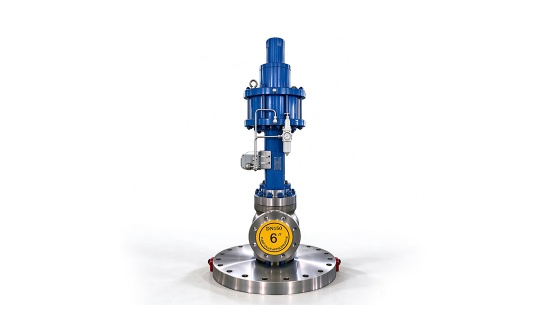
The Viti flash Angle valve is specially designed for extreme working conditions such as discharge from hydrometallurgical autoclaves, capable of withstanding high temperatures ranging from 150 to 270 ° C, a maximum pressure of 61bar, and a sonic flow rate of 20% to 25% flash rate. The valve body adopts an integrally cast streamlined flow channel, with no dead zone and no accumulation. The valve core and valve seat are made of integral pressure-free sintered silicon carbide, with a density of 3.15-3.17g/cm³ and a hardness of HRA≥89. Equipped with an actuator buffer structure to prevent closing impact on ceramic internal components, it has been applied in projects such as the Guyuan Uranium Industry of China National Nuclear Corporation and the Lovsk Gold Mine in Russia. Its service life is several times longer than that of traditional valves.
Product Feature Introduction of Viti Flash Angle Control Valve
The valves are strictly designed in accordance with standards such as ASME B16.34, GB/T12224, ISO 15848-1, API6D, etc.
2. The actuator can be equipped with pneumatic or (electro-hydraulic) drive devices, and scientific configuration ensures the control effect.
3. The valve body adopts an integrated casting process. Meanwhile, a three-dimensional flow channel optimization design has been carried out for fluid finite element analysis to prevent excessive scouring in the valve cavity caused by flow channel design issues during the flash evaporation process.
4. The special new materials produced by international advanced technology feature high strength, high hardness, heat shock resistance, and resistance to strong acid and alkali corrosion, which are comparable to the world's leading brands.
5. The core structure design of the valve body is precisely calculated through fluid mechanics. The shape, size, movement trajectory and other parameters of the internal channels and throttling components are all precisely calculated to enhance the overall erosion resistance and service life of the valve.
6. Advanced surface treatment processes and surface strengthening technologies enhance the surface performance and strength of the medium flow channel. According to the material selection and the requirements of different working conditions, they can increase the surface hardness and erosion resistance of the material while maintaining corrosion resistance.
Demand feedback
Vite Control Fluid GMBH in Germany specializes in manufacturing a full range of valve products, including automatic control regulating valves, which are applied in harsh working conditions such as high temperature, high pressure, easy erosion and corrosion. Vite Control Fluid GMBH in Germany has highly specialized engineering personnel and production equipment, and collaborates with renowned domestic universities and professional institutions in the fields of material development, fluid mechanics, valve system design and production.