
ballvalve
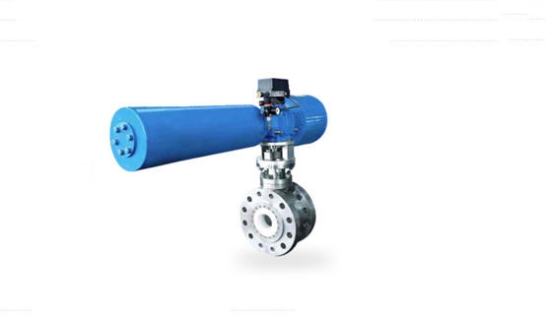
The ceramic C valves provided by Viti Industry feature a non-directional and cavity-free design. The ball core can withstand high torque and is particularly suitable for harsh working conditions where the medium is prone to crystallization, scaling, and clogging.
At present, in various industries, some working conditions with strong erosion have strict sealing requirements, but there are also situations where the medium is viscous, prone to caking, scaling, crystallization or contains large particles, causing various valve blockages. Therefore, a ball valve is needed that can be used as both a control valve and a switch valve, with good sealing performance, stable operation, and the ability to overcome various clogging situations. Compared with the eccentric and double eccentric designed valves on the market, the ceramic C valve provided by Viti Industry features a non-eccentric design, ensuring that there is no erosion to the valve stem when the valve is opened at a small opening degree, achieving the maximum protection for the valve stem. The valve ball hall and the valve seat are always in close contact, which can shear the materials and debris adhering to the sealing pair and ensure the cleanliness of the sealing pair. The self-lubricating property of the ceramic itself ensures that the ball core and valve seat do not adhere to the medium. The C ball adopts a structure design with upper and lower support shafts for positioning. The support shafts fit statically with the valve body and will not cause the C ball to tilt. The valve stem is set inside the upper support shaft, and the thrust of the medium on the C ball is received by the upper and lower support bearings. The valve stem only transmits the opening and closing torque of the ball valve.
Design features of the ceramic C valve provided by Vitet Industry:
① The valve adopts a special C-shaped structure design. The ball core is mechanically connected and inlaid together by C-shaped lugs and the ball crown. Among them, the ball crown is an integral ceramic, which can effectively protect the C-shaped lugs from being eroded by the medium.
② The valve adopts a concentric design. During the opening and closing process, the ceramic ball crown is always in close contact with the valve seat, which can scrape the material adhering to the sealing pair, better ensuring the sealing performance of the valve.
③ The C-shaped lugs of the valve directly bear the rotational torque transmitted by the valve stem, making it particularly suitable for harsh working conditions where crystallization, scaling, caking, high solid content, and easy clogging are common.
④ The valve adopts a cavity-free design, making it less likely for materials to accumulate inside the valve cavity.
⑤ The valve adopts a fixed ball design. The ball core does not move under pressure, and the operating torque is small. The highest sealing grade is ANSI VI grade.
⑥ All the flow channels in contact with the medium are lined with ceramics. The rings will not corrode the metal shell, ensuring the corrosion resistance of the valve.
⑦ The valve adopts an anti-ejection valve stem design to ensure its safety and reliability
Demand feedback
Vite Control Fluid GMBH in Germany specializes in manufacturing a full range of valve products, including automatic control regulating valves, which are applied in harsh working conditions such as high temperature, high pressure, easy erosion and corrosion. Vite Control Fluid GMBH in Germany has highly specialized engineering personnel and production equipment, and collaborates with renowned domestic universities and professional institutions in the fields of material development, fluid mechanics, valve system design and production.