
news
维替流体控制有限公司 2026-05-11 17:17 6073
In process industries such as hydrometallurgy, petrochemicals, and coal chemicals, the harsh working conditions of high temperature, high pressure, strong corrosion, and high wear impose extremely high requirements on fluid control equipment. W&T Fluid Control Co., LTD., relying on nearly a century of German manufacturing accumulation and continuous technological innovation, has successfully developed two series of special valves: Venturi flash regulating Angle valves and reactor wear-resistant ball valves. These valves are specially designed to deal with extreme applications such as severe erosion, corrosion, flash and high solid content media, and have achieved breakthrough results in many large-scale projects at home and abroad.
1. Venturi Flash Regulating Angle Valve: The ideal choice for discharge control in hydrometallurgy
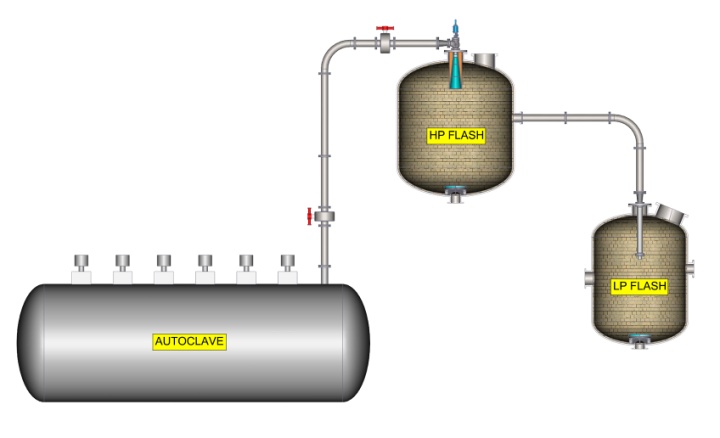
1. Harsh working conditions: A weight that conventional valves cannot bear
In hydrometallurgical processes such as nickel-cobalt pressure leaching, the discharge adjustment Angle valve is confronted with unprecedented challenges:
| Operating condition characteristics | Specific parameters/performance |
|---|---|
| High temperature | 150-250 ℃ |
| High voltage | 0.73-4.1 MPa |
| Strong corrosion | Acidic pulp with high concentrations of chloride ions and fluoride ions |
| High wear | The solid content of the pulp is 30% to 40%, and the particle hardness is high |
| Flash vapor erosion | Under high pressure difference, flash evaporation and cavitation coexist, generating extremely strong micro-jet impacts |
| Easy to crystallize | During the cooling process, the medium precipitates and crystallizes, causing blockage |
Under such working conditions, problems such as perforation of the valve body, erosion of valve internals, fracture of the valve stem, and valve jamming are commonly encountered, and the service life is only 2 to 6 months. W&T has carried out secondary development based on American technology, optimized the design of materials and processes, and significantly enhanced the service life of the valve.
2. Core design concept: "Guide rather than prevent
The W&T flash regulating Angle valve innovatively adopts the design concept of "guiding rather than blocking". It does not attempt to completely prevent the occurrence of flash evaporation (which is almost impossible under high-pressure differential conditions), but rather controls flash evaporation and cavitation in local areas through ingenious structural design, minimizing the damage they cause to the valve.
3. Six core technological highlights
(1) The Venturi acceleration principle + The spherical buffer valve cavity seat follows the Venturi acceleration principle, controlling the fluid flow rate and pressure distribution by changing the cross-sectional area of the flow channel, and guiding the flash evaporation process to occur intensively in the valve seat diffusion section. In combination with the spherical buffer valve cavity (extra-large valve cavity, centrally symmetrical design), the flow alignment does not deviate, there is no side impact, and it has good self-cleaning performance.
(2) The angular flow channel + high-strength valve stem adopts a 90° turning angular streamlined structure (the valve body can be integrally forged from imported Ti Gr.12 material), and the fluid direction gradually changes rather than suddenly, significantly reducing erosion. The valve stem is also forged as a whole with imported Ti Gr.12 material, combined with two layers of V-shaped packing on the top and bottom and butterfly spring compensating seal, ensuring smooth operation under high pressure difference and no packing leakage. The lower guide ring can prevent slag particles from entering the upper stuffing box.
(3) The entire flow channel is hardened, and the throttling zone and diffusion section of the ceramic internal components are paved with solid hard alloy, which greatly enhances the wear resistance. For the most demanding operating conditions, W&T employs pressure-free sintered high-density silicon carbide (SSiC) valve cores and seats, which have a hardness (up to 25-26 gpa for HV1000) and corrosion resistance far exceeding those of traditional metal materials, capable of withstanding flow rates close to the speed of sound and highly corrosive fluids.
(4) Multiple valve core structures + convenient maintenance design: The unique clamping valve core ring does not require the use of cage structures or threaded connections, avoiding the risk of jamming. The top-mounted design enables the valve to have its packing, valve stem and valve seat replaced on-site without having to remove the valve from the pipeline, significantly reducing maintenance time.
(5) The three-layer structure design of the silicon carbide ceramic lined anti-impact pipe (outer metal + middle PTFE lining + inner silicon carbide) effectively protects the downstream tank wall from being eroded by flash fluid.
(6) High-stiffness actuator + buffer closure: The standard configuration includes the 1-X400 series piston actuator, which features excellent rigidity and prevents the valve core from suddenly closing due to fluid impact. The top of the actuator is equipped with a buffer structure. When closing, it slowly contacts the valve seat to prevent impact damage to the ceramic valve core. It also supports intelligent control to meet the AI data collection requirements of digital factories.
4. Practical Effect (Flash Evaporation System of a nickel-cobalt Smelting Plant)
According to the selection rule of "first understand the process → then solve the working conditions → and then understand the medium", W&T re-selected flash Angle valves for the Jinchuan Sannickel workshop.
Process: Continuous discharge, liquid level adjustment → Select adjustable flash Angle valve.
Operating conditions: High temperature and high pressure (120-130℃ / 0.95MPa), complex pipelines → Automatic carbon compensation, over-stroke guidance
Medium: High solid content (30%-40%), severe erosion → Ceramic valve core and seat, negative pressure cladding technology
Operational achievements (approved by the workshop seal) : cost reduction and efficiency improvement, energy conservation and consumption reduction, safe operation, and exceeding service life.
2. Wear-resistant ball valve for Reaction vessels: The Nemesis of high-solid and highly corrosive media
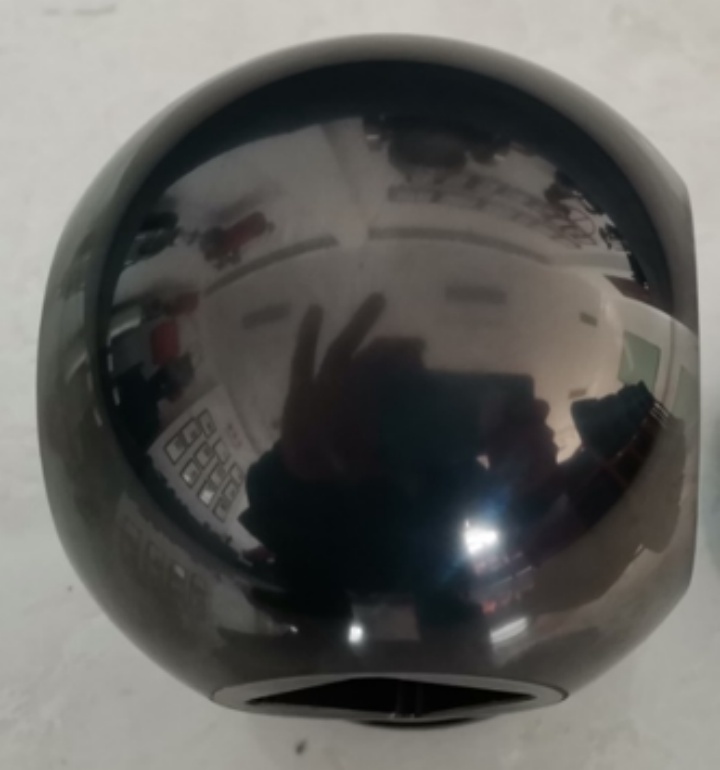
1. Application Scenarios and Challenges: In working conditions such as hydrometallurgical reactors, slurry transportation, and pipelines with high solid content, ball valves are confronted with multiple challenges including medium erosion and wear, chemical corrosion, and temperature and pressure fluctuations. Traditional ball valves often experience rapid seal failure and short service life.
2. Core technical features
(1) Multi-seal structure
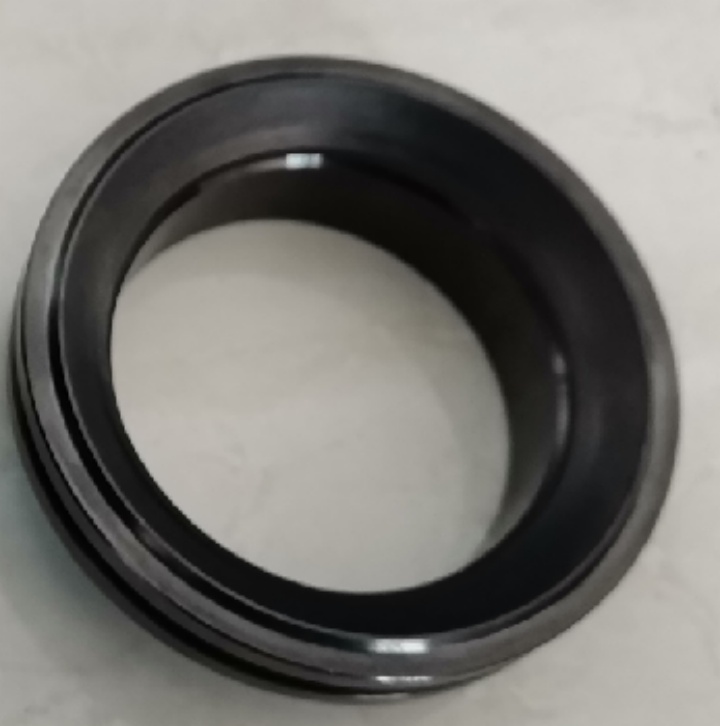
The packing structure adopts a triple seal of wear-resistant bearing + perfluoroether rubber O-ring + graphite, and the sealing grade meets ISO 15848-B level
The dynamic load pressure plate provides continuous preload for the packing, effectively compensating for temperature and pressure fluctuations as well as packing wear
(2) Unique double-bearing design
Prevent the valve stem from tilting sideways to avoid leakage at the packing area after the valve has been opened and closed for a long time
Stabilize the friction torque to prevent materials from entering the bushing area
(3) Square valve stem groove design
Increase the compression area between the valve stem and the ball to prevent the ball from floating excessively
Improve transmission reliability
(4) Optimize the valve seat design
The overall structure of the valve seat is designed with mature parameters to enhance the assembly qualification rate and the stability of product quality
Processing and maintenance costs have been reduced
(5) Optimization of disc springs
Ensure excellent sealing under low pressure difference
It has a large rigidity coefficient, is not affected by temperature, and can compensate for the wear of the sealing surface
(6) No O-ring design
Avoid problems such as fire, assembly damage, cleaning damage and aging caused by O-rings
3. Nano-composite coating technology
The W&T reactor wear-resistant ball valve adopts advanced nano-composite coating technology, with outstanding coating performance
The overall thinking and practical rules for the selection and matching of special valves
In the selection and matching of special valves, W&T has always adhered to the three-step rule of "first understand the process → then solve the working conditions → and then understand the medium"
Understand the process: What functions do valves play in the flow? How are the upstream and downstream equipment connected?
Solve working conditions: temperature, pressure, action frequency, pipeline layout... Determine the structural design, sealing form and driving mode of the valve
Understand the medium: composition, pH value, solid content, particle size, viscosity, crystallization tendency... Determine the material selection and wear resistance and corrosion resistance of the valve
Only by clarifying these three levels can we select a special valve that is "tailored to the problem", guided by a holistic mindset, cross-border integration and breakthrough creation, and truly smooth out the safety production process.
Summary
The W&T flash regulating Angle valve and the wear-resistant ball valve for reaction vessels are special control equipment tailor-made for harsh working conditions in hydrometallurgy, petrochemicals, coal chemicals and other industries. They organically combine advanced technologies such as Venturi acceleration principle, spherical buffer valve cavity, full flow channel hardening, silicon carbide ceramic internal components, and nano-composite coating, effectively solving the technical problems of valve damage and instability under high-temperature, high-pressure difference, strong corrosion and high wear conditions.
Choosing Viti means choosing to use German craftsmanship and independent innovation to break through every checkpoint of your safe production.
Demand feedback
Vite Control Fluid GMBH in Germany specializes in manufacturing a full range of valve products, including automatic control regulating valves, which are applied in harsh working conditions such as high temperature, high pressure, easy erosion and corrosion. Vite Control Fluid GMBH in Germany has highly specialized engineering personnel and production equipment, and collaborates with renowned domestic universities and professional institutions in the fields of material development, fluid mechanics, valve system design and production.