
news
维替流体控制有限公司 2025-12-22 15:11 2095
The assembly process of several parts forming a valve component (such as valve cover, valve disc component, etc.) is called component assembly, and the assembly process of several parts and components forming a valve is called final assembly. Assembly work has a significant impact on product quality. Even if the design is accurate and the parts are qualified, if the assembly is improper, the valve will not meet the specified requirements and may even cause sealing leakage. Therefore, special attention should be paid to adopting a reasonable assembly method to ensure the final quality of the valve product. The assembly process defined in the form of documents during production is called an assembly process specification.
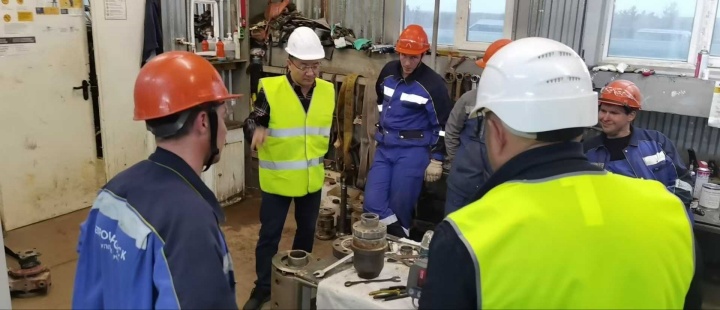
There are three common assembly methods for valves, namely the complete interchangeability method, the repair method and the selection method.
1. Repair method
The valve is assembled by the repair method. The parts can be processed according to economic precision. During assembly, a certain size with regulating and compensating functions is repaired to achieve the specified assembly goal. For instance, for the gate and valve body of a wedge gate valve, due to the excessively high processing cost required to achieve interchangeability, most manufacturers adopt the repair and fitting method. That is, when the final grinding of the gate plate sealing surface control opening size is carried out, it should be matched with the opening size of the valve body sealing surface in the form of assembly to achieve the ultimate sealing requirement. Although this method adds a plate matching process, it greatly simplifies the dimensional accuracy requirements of the previous processing procedures. The dedicated personnel in the plate matching process are highly skilled, and overall, it will not affect the production efficiency. The assembly process of valves: Individual valves are assembled at fixed sites. The assembly of valve parts and components as well as the final assembly are carried out in the assembly workshop. All the required parts and components are transported to the assembly work site as a whole. Usually, component assembly and final assembly are carried out simultaneously by multiple groups of workers. This not only shortens the assembly cycle but also facilitates the application of dedicated assembly tools, and has relatively low requirements for the technical grades of workers.
2. Complete interchange method
When valves are assembled by the complete interchangeability method, each part of the valve can be assembled without any trimming or selection, and the assembled product can meet the specified technical requirements. At this point, the valve parts must be processed completely in accordance with the design requirements to meet the requirements of dimensional accuracy and positional tolerance. The advantages of the complete interchange method are: the assembly work is simple and economical, workers do not need to have a high level of skills, the production efficiency of the assembly process is relatively high, and it is easy to organize assembly lines and specialized production. However, absolutely speaking, when complete replacement assembly is adopted, the machining accuracy requirements for parts are relatively high. It is applicable to valve types with absolutely simple structures such as globe valves, check valves and ball valves, as well as medium and small diameter valves.
3. Selection and matching method
The valve is assembled by the selection method. The entire machine can be processed according to economic accuracy. During assembly, a certain size with regulating and compensating functions is selected to achieve the specified assembly accuracy. The principle of the matching method is similar to that of the repair method, but the way to change the size of the compensation ring is different. The former changes the size of the compensation ring by selecting accessories, while the latter changes the size of the compensation ring by adjusting the accessories. For instance, the top core and adjusting gasket of the control valve model double gate wedge gate valve, and the adjusting gasket between the two bodies of the swing ball valve, etc., are made by selecting special parts as compensating components in the dimensional chain related to assembly accuracy. By adjusting the thickness of the gasket, the required assembly accuracy is achieved. To ensure that fixed compensating parts can be selected in different situations, it is necessary to pre-manufacture a set of washers, shaft sleeve compensating parts and hydraulic control valve models of different thickness dimensions for selection during assembly.
The steps for valve assembly
Preparatory work before assembly
Before assembly, the valve parts need to remove the burrs formed by mechanical processing and the residual welding slag from welding, and clean and cut the packing and gaskets.
2. Cleaning of valve parts
The inner cavity of the valve installed for fluid pipeline control must be clean. Especially for valves used in nuclear power, pharmaceutical and food industries, to ensure the purity of the medium and prevent medium contamination, the requirements for the cleanliness of the valve cavity are even more stringent. Before assembly, the valve parts should be cleaned to remove the chips, debris, residual lubricating oil, coolant, burrs, welding slag and other contaminants on the parts. The cleaning of valves is usually carried out by spraying or brushing with alkaline clean water or hot water (kerosene can also be used for wiping) or in an ultrasonic cleaner. After grinding and polishing, the parts need to undergo a final wash. The final cleaning usually involves brushing the sealing surface with gasoline, then drying it with compressed air and wiping it clean with a cloth.
3. Preparation of packing and gaskets
Graphite packing is widely used due to its advantages such as corrosion resistance, good sealing performance and low friction coefficient. Packing and gaskets are used to prevent the medium from leaking through the valve stem, valve cover and the joint surface of the flange. All these accessories should be cut and prepared for use before the valve is assembled.
4. Valve assembly
Valves are usually assembled with the valve body as the reference part in accordance with the sequence and method specified by the process. Before assembly, all components and parts should be inspected to prevent undeburred and uncleaned parts from entering the final assembly. During the assembly process, parts should be handled with care to avoid bumps and scratches on the processing personnel. The moving parts of the valve (such as the valve stem, bearings, etc.) should be coated with industrial grease. The valve cover and the flange in the valve body are mostly connected by bolts. When tightening the bolts, they should be tightened proportionally, alternately, repeatedly and evenly. Otherwise, the joint surface of the valve body and the valve cover will cause leakage of the flow control valve due to uneven force around. When tightening, the wrench used should not be too long to prevent excessive preload from affecting the strength of the bolt. For valves with strict requirements for preload, a torque wrench should be used to tighten the bolts according to the specified torque requirements. After the final assembly is completed, the control mechanism should be rotated to check whether the movement of the valve opening and closing parts is flexible and if there is any jamming. The valve cover, bracket and other parts of the pressure reducing valve should be installed in accordance with the requirements of the drawing. Only after all inspections are passed can the valve be tested.
Demand feedback
Vite Control Fluid GMBH in Germany specializes in manufacturing a full range of valve products, including automatic control regulating valves, which are applied in harsh working conditions such as high temperature, high pressure, easy erosion and corrosion. Vite Control Fluid GMBH in Germany has highly specialized engineering personnel and production equipment, and collaborates with renowned domestic universities and professional institutions in the fields of material development, fluid mechanics, valve system design and production.