
news
维替流体控制有限公司 2025-12-23 11:35 2208
There is a difference between knife gate valves and slurry valves. In the past, where slurry valves were needed, knife gate valves could actually be used as substitutes. Generally speaking, knife gate valves are more convenient to use. However, for those places with very strict requirements for segmentation, using slurry valves is still a better choice. Is there any difference between a knife gate valve and a slurry valve? Viti Industry will introduce the differences between the two to you.
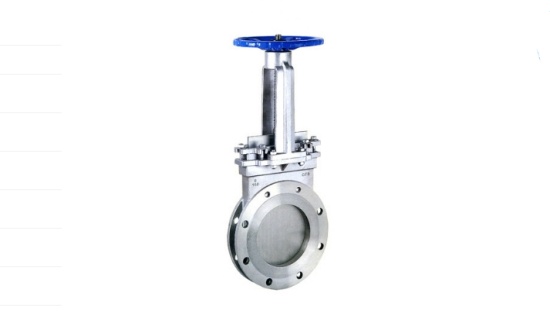
1. Different media used: Slurry valves can only be used in slurry pipelines. The valve seat is made of rubber and contacts the edge of the gate plate for sealing. The valve can be pressurized in both directions, and there is no groove at the bottom, which prevents the valve from clogging debris. Such valves are generally used in clean water, sewage and liquid media. The knife-type gate, as the name suggests, has a gate plate with a knife edge. When the valve is closed, it can cut off the slurry in the medium. The gate plate can be easily closed without jamming. It can not only be used as a substitute for slurry valves but also in some pipeline environments with solid media such as gold ore powder, tailings, pulp, wood pulp, fibers, dust, ore sand, and slag.
2. Different operating temperatures: The structure of the slurry valve restricts that it can only use rubber sealing, and the temperature must be ≤80℃. However, the knife gate valve, in addition to being able to use fluororubber sealing at a higher temperature (≤180 ℃) on the basis of rubber sealing, can also be processed into metal sealing, and can be used in pipelines with a maximum temperature of over 1000 ℃.
The slurry valve has a very high application efficiency in slurry (such as clear water, sewage and other liquid media) pipelines. Its valve seat seal is achieved by rubber in contact with the edge of the gate valve. The entire valve can be pressurized in both directions, and there is no groove at the bottom, which ensures that there will be no clogging of sludge during use.
In contrast, the knife gate valve has a wider range of applications. It can not only be used in liquid media such as clear water and sewage, but also perform well in media containing solids like chemical fibers, pulp and mineral pulp. Its gate is equipped with a knife edge, which enables it to effectively cut off these media, and the gate can be easily closed without jamming.
Demand feedback
Vite Control Fluid GMBH in Germany specializes in manufacturing a full range of valve products, including automatic control regulating valves, which are applied in harsh working conditions such as high temperature, high pressure, easy erosion and corrosion. Vite Control Fluid GMBH in Germany has highly specialized engineering personnel and production equipment, and collaborates with renowned domestic universities and professional institutions in the fields of material development, fluid mechanics, valve system design and production.